
One Wink Plot
Lovejoy's first proper caper. A reformed junkie hires him to recover statuettes she pinched from her dying father; Charlie Gimbert double-crosses him at the auction; revenge comes via a long con featuring a forger, a barker, a vegan apprentice, an addict and an aristocrat.
Review
"I need you, Lovejoy. Since my wife died, I need someone to hate."
This is the one. After two episodes finding its feet — the masterful Firefly Cage and the slightly wobbly Welsh dresser — The Sting is where Lovejoy properly clicks. Five out of five. If a friend has somehow staggered into 2026 without ever seeing an episode, this is where I'd start them.
The episode opens with a delicious feint: Lovejoy himself behind the rostrum, gavelling down a fifteenth-century Korean vase. Our McMuffin (or McGuffin, if you must), or so we are led to believe. Of course it isn't. It never is.
And speaking of period authenticity — Hard Rock Café gets a name-check. A perfect 1986 signifier, except weirdly permanent: queuing for fashionable restaurants is somehow still A Thing in 2026. The bit that doesn't translate is everything else. Pre-internet. Pre-mobile. Ten years before either. You forget how recently we lived in a world where you couldn't just look it up. Reassuringly recognisable, but — blimey — different enough.
Our client this week is Corinna Hope: reformed junkie, embezzler, daughter to a dying father whose estate is about to be catalogued by people who will notice a few missing statuettes. Her former drug pusher turns up in act one, looking less like a menace and more like a Knightsbridge estate agent with a slightly-too-good car. Zero threat. Even the menace is posh.
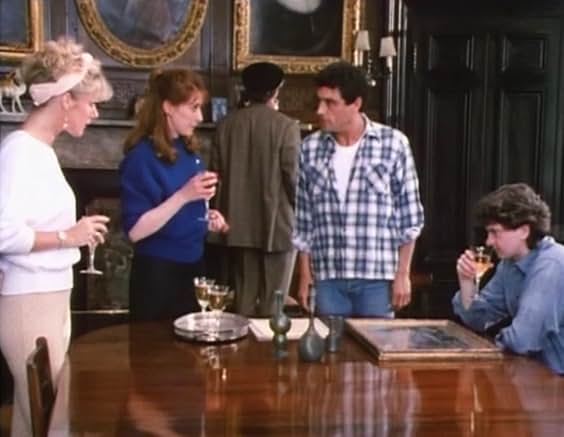
The plot is labyrinthine again, but it winds entirely through auction houses — and the BBC was always extraordinary at filming rooms full of polished mahogany and the quiet hum of money changing hands. That alone is reason enough to recommend it. The whole crew is in: Eric on apprentice duty, Tinker tipsy and quotable, Lady Jane elegant and amused, Dandy Jack… still mostly hiding. I include his picture.
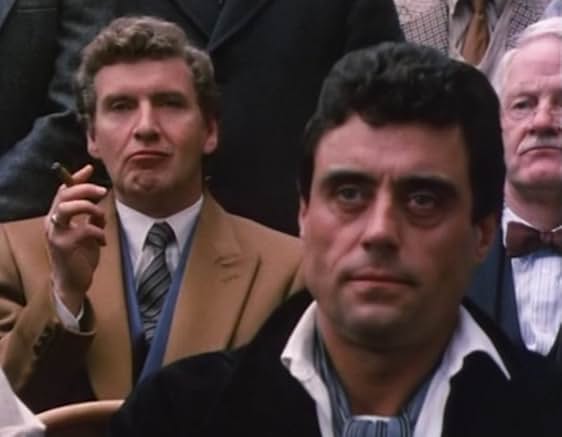
Then the Gimbert speech, delivered while shooting clay pigeons with the air of a man for whom a Saturday morning is essentially grief management: "I need you, Lovejoy. Since my wife died, I need someone to hate." It is a brilliant line, and an even better delivery from Malcolm Tierney — sour, wounded, completely sincere about the loathing. So sincere that the late Mrs Gimbert is, naturally, never spoken of again. Lovejoy's universe doesn't really do grief. Or continuity.
Special mention for Fred, Gimbert's put-upon henchman, who performs his duties with the resigned air of a man whose career options have been narrowed to "this" or "honest work." Some of the funniest lines in the episode are his, mostly delivered from a half-step behind Gimbert and at an angle suggesting he'd rather be in actual prison.
Best individual scene in the episode: Lady Jane has rushed back from a friend's wedding, kicks her heels off, and plays pool with Lovejoy in the pub. Forty years on, the chemistry between McShane and Logan still does the work that sixty minutes of plotting cannot. You watch them rack up the balls and you understand exactly why this show worked.
The forgery sequence is a genuine joy. A few glugs of red wine, a couple of laps round the oven and a splash of turps, and Tinker's contributions are ready for market. Aged, as the kids would say, like Cliff Richard.
And mid-auction, Lovejoy turns to camera with the line that — more than the gavel, the dodgy Volvo or the leather jacket — actually defines what the show is about: "A wink is as good as a flag to an auctioneer." That is the entire premise of the divvy in one tidy sentence. Print it on a T-shirt; I'll buy six.
A final, perfect grace note. At the climactic auction the auctioneer takes Lady Jane's winning bid with a polite "Sold to Mrs Felsham." Janey's eyebrow goes up by maybe half a millimetre — but it does go up. There are limits to her proletarianism, as it turns out. Her ladyship will happily slum it with the antiques crowd, but not at the expense of being correctly addressed.
All for one, and one for Gimbert. The first time the ensemble pulls a job together, and the show works out what it is. If you've never seen an episode of Lovejoy in your life, watch this one. The rest will follow.